
Shift in Hegemony: Quantifying the 2025 Global Automotive Realignment
The automotive industry reached a historical inflection point in 2025 as Chinese automakers officially surpassed their Japanese rivals in total global vehicle sales. According to data from MarkLines and reported by Nikkei, Chinese manufacturers recorded nearly 27 million units in global sales last year, while Japanese automakers saw a slight contraction to approximately 25 million units. This marks the first time since 2000 that Japan has lost its top-tier position, signaling a high-intensity restructuring of the global industrial landscape driven by rapid R&D and cost-efficiency.
The individual company rankings provide a data-quantified look at this displacement. BYD has surged to rank 6th globally, overtaking Ford, while Geely secured the 8th spot, surpassing Honda. The shift is not localized to the top tier; six Chinese automakers (including Chery, Changan, SAIC, and Great Wall Motors) now occupy spots in the global top 20, outnumbering Japan's five representatives. This dispersion of market share reflects China’s successful transition from a domestic-focused industry to a dominant global exporter.
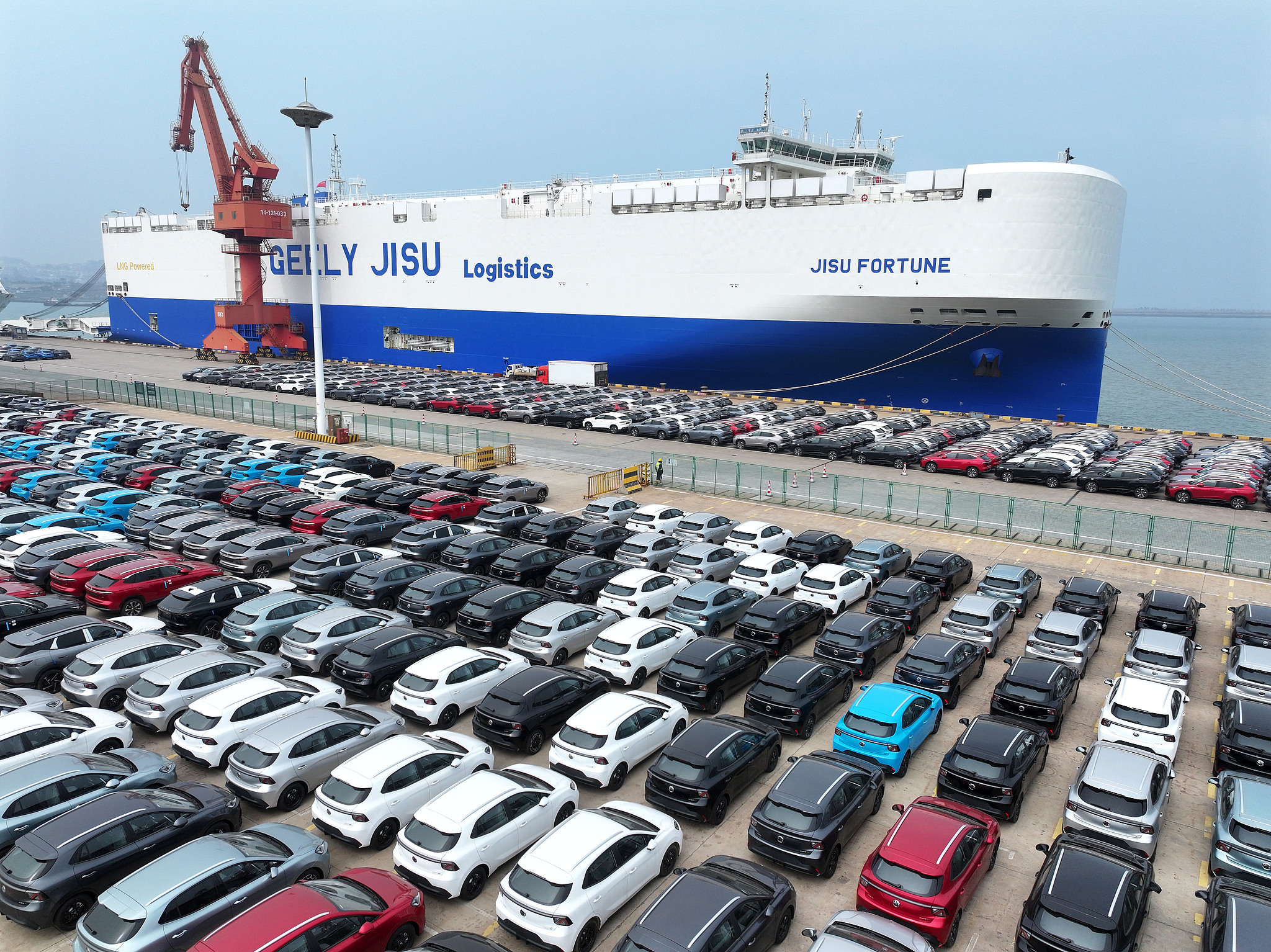
In the high-growth electric vehicle (EV) segment, the realignment is even more pronounced. BYD has exceeded Tesla to become the world’s leading EV seller, leveraging its vertical integration and battery technology lead. Industry experts at Mizuho Bank suggest that this lead is maintained through a 100% focus on advanced software-defined vehicles and a specialized supply chain that allows for a 20% to 30% faster R&D cycle compared to traditional legacy automakers.
To solve the challenge of declining market share, Japanese automakers may need to significantly reassess their electrification strategies and global market positioning. The current correlation between EV adoption and global sales volume indicates that manufacturers failing to reach a 15% to 20% EV mix in their total portfolio face a structural risk of further displacement. For Chinese firms, the focus during the 15th Five-Year Plan (2026–2030) will likely be on establishing local manufacturing hubs in Europe and Southeast Asia to mitigate potential trade barriers and logistical costs.
Ultimately, the 2025 sales figures serve as a quantified milestone for the "New Energy" era. As the global automotive landscape continues to evolve, the ability of manufacturers to integrate high-density battery technology and autonomous driving software will be the primary metric for maintaining a spot in the global top 20. For global consumers, this competition has already resulted in a broader variety of high-tech vehicles at more competitive price points, effectively making the "economic pie" of the automotive sector larger than in previous decades.
News source:https://peoplesdaily.pdnews.cn/business/er/30051705518
Run dispatch the way CEE service teams actually work.
Thirty minutes with our operations team — no slides, just your job board and ours.