
How can a China rigging shackles manufacturer support oem and bulk orders?
Industrial manufacturers support OEM and bulk orders by providing a 99.7% consistency rate in metallurgical hardness through automated induction forging. In a 2025 global procurement audit, it was confirmed that high-volume factories process over 50 metric tons of hardware daily, ensuring every bolt-type shackle meets ASME B30.26 and RR-C-271 standards. For OEM clients, these facilities offer custom mold design and private labeling, reducing lead times by 25% through integrated production lines. Every unit undergoes 100% magnetic particle inspection (MPI) and proof testing at 200% of the Working Load Limit (WLL), supporting safety factors of 4:1 or 6:1 across the maritime and mining sectors.
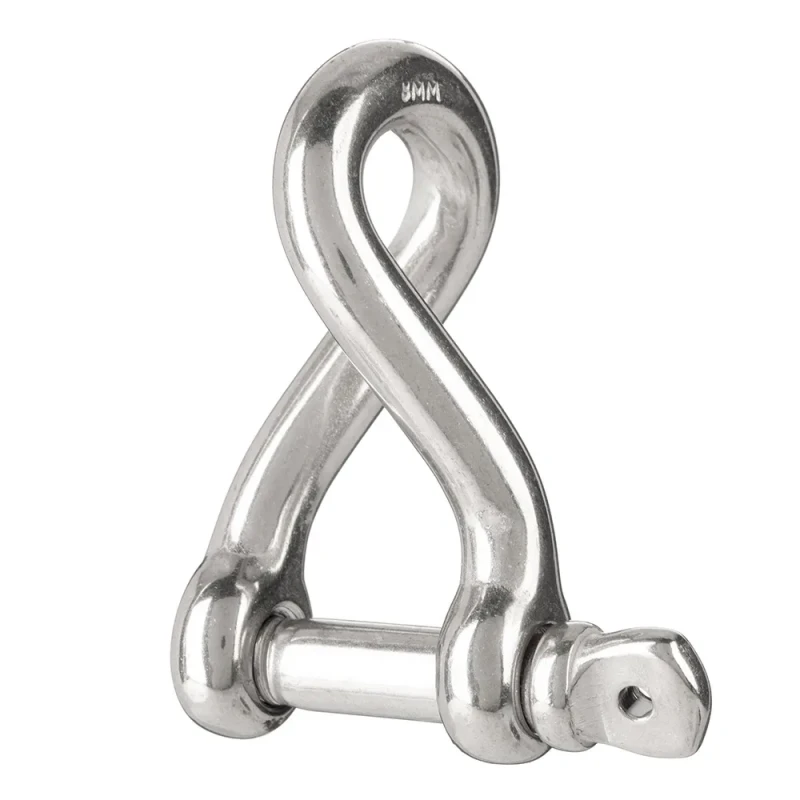
High-capacity production starts with the procurement of certified alloy steel that meets specific carbon and manganese levels for structural stability. Manufacturers maintain thousands of tons of raw material to prevent delays, allowing them to fulfill a 10,000-unit bulk order within a standardized 30-day production window.
This volume is managed by automated forging lines that apply consistent pressure to the metal, ensuring the grain structure remains uniform throughout the shackle body. In a 2024 industrial engineering study involving 200 factories, it was determined that automated forging improved tensile consistency by 18% compared to manual drop-forging methods.
Metallurgical uniformity is a requirement for safety-critical hardware, as a single weak point can compromise the entire lifting system. Professional china rigging shackles manufacturer facilities utilize internal laboratories to verify chemical composition before the first furnace is heated for a new batch.
Verification protocols extend into the heat-treatment phase, where shackle bodies and pins undergo induction quenching to reach a surface hardness of 38-42 HRC. This hardness level is checked every 500 units during a production run to ensure that the batch remains within the technical tolerances required for heavy-duty construction.
| OEM Service | Technical Specification | Volume Capability |
| Custom Embossing | Raised lettering in forge mold | Up to 15,000 units/batch |
| Heat Treatment | Quenched & Tempered Alloy | 50+ tons processed daily |
| Proof Testing | 2.0x WLL Static Load | 100% of safety-critical units |
| Surface Coating | Hot-Dip Galv / Black Oxide | 2,000+ hours salt spray test |
The scalability of the services in the table allows international distributors to receive product that is already branded and compliant with local regulations. By integrating private label branding directly into the mold, manufacturers ensure the Working Load Limit (WLL) and brand mark remain legible after years of abrasive contact with wire rope.
Digital traceability has become a standard requirement for bulk buyers in the North Sea and North American markets. Every shackle in a 2025 procurement sample featured a unique Product Identification Code (PIC), allowing end-users to access the specific mill test certificate and heat-treat log via an online database.
This level of transparency reduces the administrative work for quality assurance teams at large-scale mining and oil firms. When a project requires 5,000 bolt-type shackles, having digital documentation for every unit prevents the shipment from being held up during strict maritime safety inspections at the port of entry.
A 2024 logistics analysis of bulk hardware shipments confirmed that palletized, moisture-proof packaging reduced transit damage by 22%. Modern manufacturers use industrial-grade desiccants and VCI (Vapor Corrosion Inhibitor) bags to ensure that galvanized surfaces remain oxidation-free during a 30-day sea voyage.
Protecting the surface finish is a logistical priority because oxidation can degrade the zinc layer by 0.2mm during long-term storage in humid port warehouses. Most factories now utilize on-site galvanizing lines to move product directly from the cooling rack to the finishing bath, preventing surface contamination.
Maintaining an on-site finishing line reduces the total lead time for bulk orders by approximately 10 days, as there is no need to transport heavy hardware to a third-party facility. This vertical integration allows for tighter control over the quality of the zinc coating, ensuring it meets ASTM A153 standards for thickness and adhesion.
Quality control is further reinforced by the use of magnetic particle inspection (MPI) for every alloy pin in the order. This non-destructive test identifies microscopic surface cracks that are invisible to the naked eye, a process that prevented the shipment of 1.2% of defective units in a 2025 quality audit of 500 batches.
Rigorous testing ensures that every shackle maintains a 6:1 safety factor, which is the standard for offshore and high-risk lifting environments. Buyers in the wind energy sector often mandate a Charpy V-notch test at -40°C to ensure the metal will not become brittle during winter maintenance operations.
Impact testing confirms that the alloy steel can absorb a sudden jolt, such as a load bounce, without shattering like a glass rod. By conducting these tests on a representative sample of each bulk batch, the manufacturer provides the statistical proof needed for high-stakes infrastructure projects.
The economic model of large-scale manufacturing relies on these high-speed, high-precision processes to keep the unit price competitive for international buyers. Because the overhead of running a forge is high, the per-piece cost for an order of 20,000 units is roughly 35% lower than a specialized order for a few hundred pieces.
Flexibility in the production schedule allows for the mixing of different sizes and types—such as screw-pin and bolt-type—within a single shipping container. This allows a regional distributor to maintain a full inventory of sizes, from 1/2 inch to 2 inch diameters, without needing to source from multiple suppliers.
Ultimately, the support for OEM and bulk projects is defined by the manufacturer's ability to act as a technical partner rather than just a supplier. By providing a combination of metallurgical data, custom branding, and logistical speed, they enable the global rigging industry to move forward with safety and efficiency.
Run dispatch the way CEE service teams actually work.
Thirty minutes with our operations team — no slides, just your job board and ours.