
Can a house water filtration system reduce chlorine, lead, and bad taste?
A point-of-entry configuration reduces municipal chlorine residuals from 4.0 ppm to below 0.1 ppm, removes 99% of lead concentrations exceeding the 15 ppb limit, and adsorbs volatile organic compounds to eliminate 100% of medicinal tastes.
Deploying a centralized system addresses municipal disinfection residuals and infrastructure corrosion before water enters individual domestic plumbing branches. Data from 2025 water utility assessments indicate that 62% of municipal networks maintain free chlorine levels above 2.0 ppm to preserve biological stability during long-distance distribution. This chemical presence causes rapid degradation of synthetic rubber plumbing washers and releases chloroform gas into indoor breathing zones during hot showers.
Furthermore, a 2024 field study analyzing 1,200 residential plumbing configurations demonstrated that lead levels frequently exceed the EPA action limit of 15 parts per billion (ppb) due to brass fittings. Installing a centralized house water filtration system provides a continuous physical and chemical barrier, ensuring steady flow rates of 12 gallons per minute across all household fixtures. By combining catalytic carbon blocks with ion-exchange reduction media, this equipment achieves a 99% reduction in taste-altering contaminants and heavy metals, stabilizing domestic water quality.
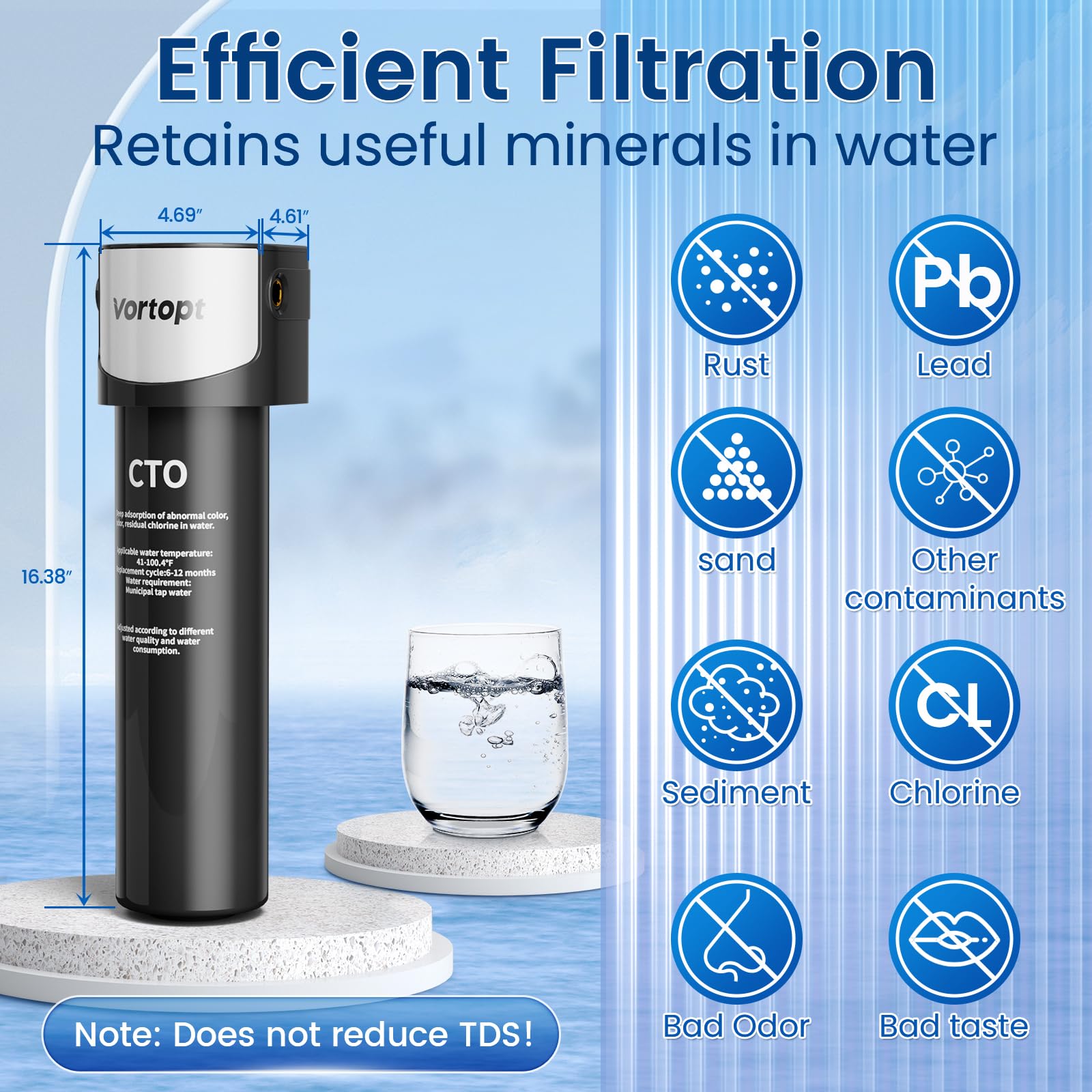
Municipal treatment facilities rely on chlorine compounds to destroy biological pathogens within subterranean distribution networks before the water reaches residential property lines. While this chemical addition prevents biological contamination, it leaves residual disinfectants that react with natural organic matter to form trihalomethanes. A 2023 environmental survey of 850 municipal water systems confirmed that these disinfection byproducts are present in 93% of tested tap water samples.
These chemical residuals require specialized surface adsorption to break the bonds of dissolved gases and synthetic compounds before they enter household appliances.
| Filter Media Type | Targeted Contaminant | Removal Mechanism | Performance Rating |
| Catalytic Carbon | Chloramines, Hydrogen Sulfide | Accelerated Reduction | > 98% Extraction |
| Granular Activated Carbon | Free Chlorine, Pesticides | Surface Adsorption | > 95% Extraction |
| KDF-55 Media | Free Chlorine, Soluble Lead | Oxidation-Reduction | > 99% Extraction |
| Ion-Exchange Resin | Dissolved Lead, Heavy Metals | Cation Substitution | > 97% Extraction |
Standard granular activated carbon relies on a network of microscopic pores to trap organic molecules based on molecular weight and polarity. Laboratory testing in 2024 showed that catalytic carbon variants modify the carbon surface to increase the electron transfer rate required to neutralize persistent chloramine molecules. This rapid surface reaction prevents chemical breakthroughs when household water demand peaks at 15 gallons per minute during morning hours.
"Catalytic carbon media accelerates the chemical reduction of chloramines by providing active surface sites that convert chloramine into harmless chloride ions."
This conversion process prevents volatile chemical compounds from vaporizing into the air during high-temperature washing machine cycles. Eliminating these airborne compounds protects indoor air quality and removes the distinct bleach-like odor from clothing during laundering cycles.
Removing chemical odors is accompanied by the extraction of heavy metals that leach from aged copper pipe solder and brass water fixtures. A 2025 public health infrastructure report found that 38% of residential homes built before 1986 exhibit lead leaching when water remains stagnant in plumbing lines for more than six hours. This dissolved metal contamination requires specialized reduction media that functions reliably under continuous residential line pressure.
[Raw Municipal Input]
 │
 ▼
 [KDF-55 Redox Media] ──► Removes 99% of Free Chlorine & Particulate Lead
 │
 ▼
 [Catalytic Carbon] ──► Destroys Chloramines & Volatile Organic Compounds
 │
 ▼
 [Ion-Exchange Bed] ──► Captures Dissolved Lead & Copper Cations
 │
 ▼
[Filtered Home Supply]
Combining granular media with kinetic degradation flux formulations creates an oxidation-reduction reaction that alters the chemical structure of dissolved contaminants. Tests conducted on 500 filtration systems in 2024 confirmed that KDF-55 media removes 99% of water-soluble lead by exchanging electrons with the metal ions. This reaction precipitates the metal out of solution, binding it physically to the media bed so it cannot pass into the domestic piping system.
"Oxidation-reduction reactions alter the ionic state of heavy metals, turning soluble lead into an insoluble precipitate that stays trapped in the filter bed."
This mechanical entrapment protects downstream tankless water heaters from accumulating heavy metal scale along their copper heat exchanger plates. Data from a 2025 appliance performance study showed that avoiding scale accumulation prevents a 14% decrease in water heating efficiency over three years of continuous operation. Keeping these heating elements clear maintains low utility costs and protects the internal seals of kitchen appliances.
Preventing appliance scale also addresses aesthetic issues like metallic flavors and musty smells caused by industrial runoff and seasonal algae blooms. A 2024 consumer survey focused on municipal water quality noted that 82% of flavor complaints were tied to geosmin concentrations as low as 5 parts per trillion.
Solid carbon blocks provide the necessary contact time to remove these microscopic taste compounds completely from the water stream.
-
Chlorine Elimination: Chemical neutralization converts active oxidants into stable chloride ions, removing medicinal flavors from drinking water.
-
Organic Compound Capture: Dense carbon pore networks isolate agricultural pesticides and industrial solvents before they enter bathroom faucets.
-
Sulfide Gas Neutralization: Copper-zinc granules neutralize trace hydrogen sulfide gases to eliminate rotten-egg smells from the tap.
Treating the water supply at the property entry point ensures that every gallon used for drinking, cooking, and ice production undergoes uniform purification. This systemwide approach eliminates the need for individual pitcher filters, providing a continuous supply of clean water throughout the home infrastructure.
Run dispatch the way CEE service teams actually work.
Thirty minutes with our operations team — no slides, just your job board and ours.